I’ll stab you in the eye.

But first, I’ll stab myself in the finger. Repeatedly.

I learned the hard way that drinking wine while needle felting is not a good idea.
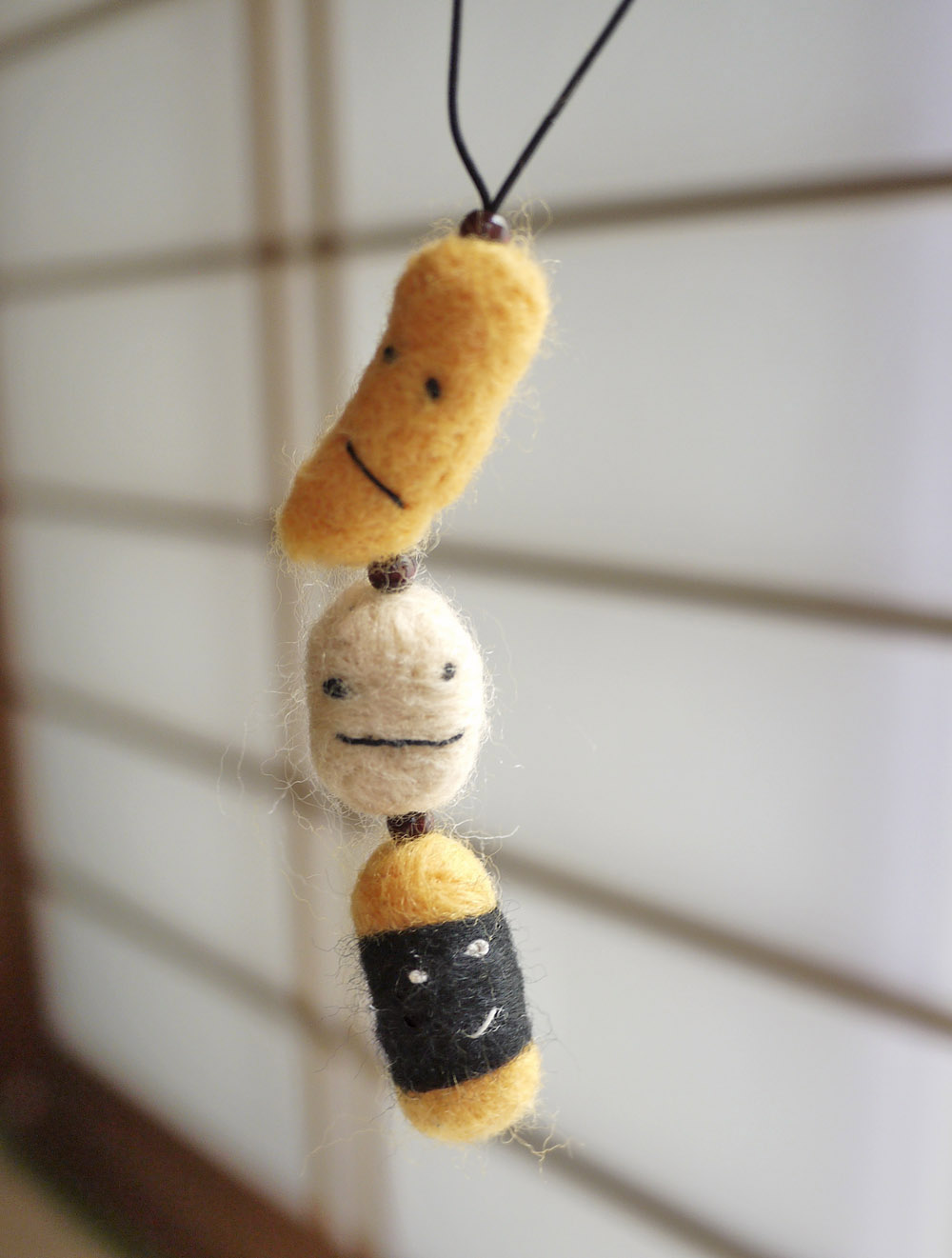
Needle felting is a bit trendy in Japan now, so it is easy to find inexpensive, adorable felting kits. This was my first attempt so I wanted to start slowly. I skipped all things cute and cuddly (with limbs — too advanced!) and instead opted for beer snacks on a strap.

Beer, fava bean, beer snacks.

The kit comes with everything you need … except the most important part, the needle. You have to get that yourself, probably because felting needles are a bit more expensive than your average needle. The instructions also recommend purchasing a foam base. A friend gave me a tip and suggested using a cheap kitchen sponge from the 100 yen shop. It was a bit clumsy to work with, but I’m not sure it was the sponge’s fault.
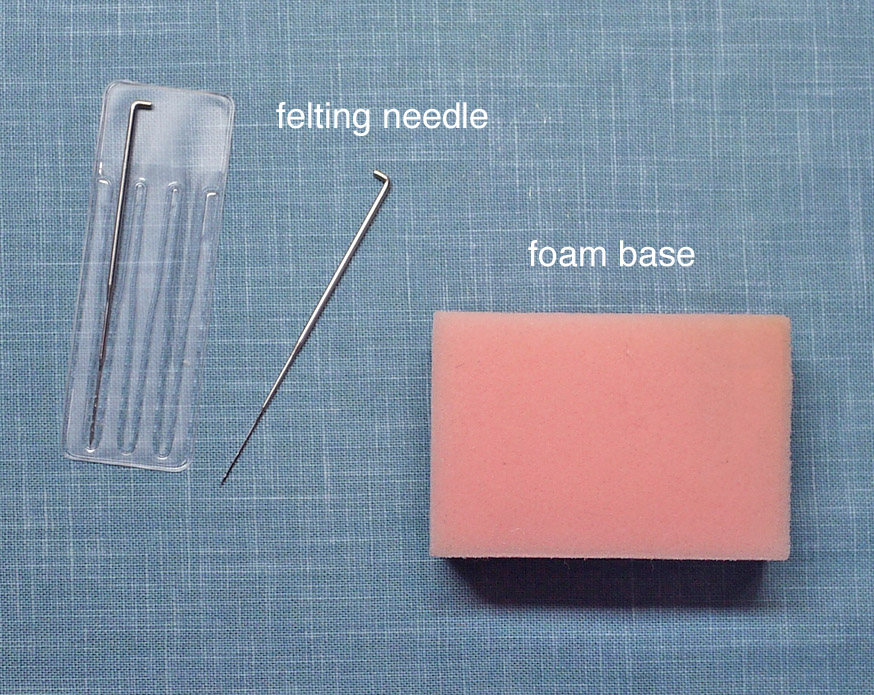
Felting needles are unique in that they have tiny barbs near the tip, which catch the wool fibers and help felt it together.

I didn’t know what I was doing. I tried reading the Japanese instructions, then watched a few YouTube videos and stabbed at some wool for a while. And stabbed and stabbed. And then I missed a few times. Blood functions as glue, right?

Eventually I got my revenge.
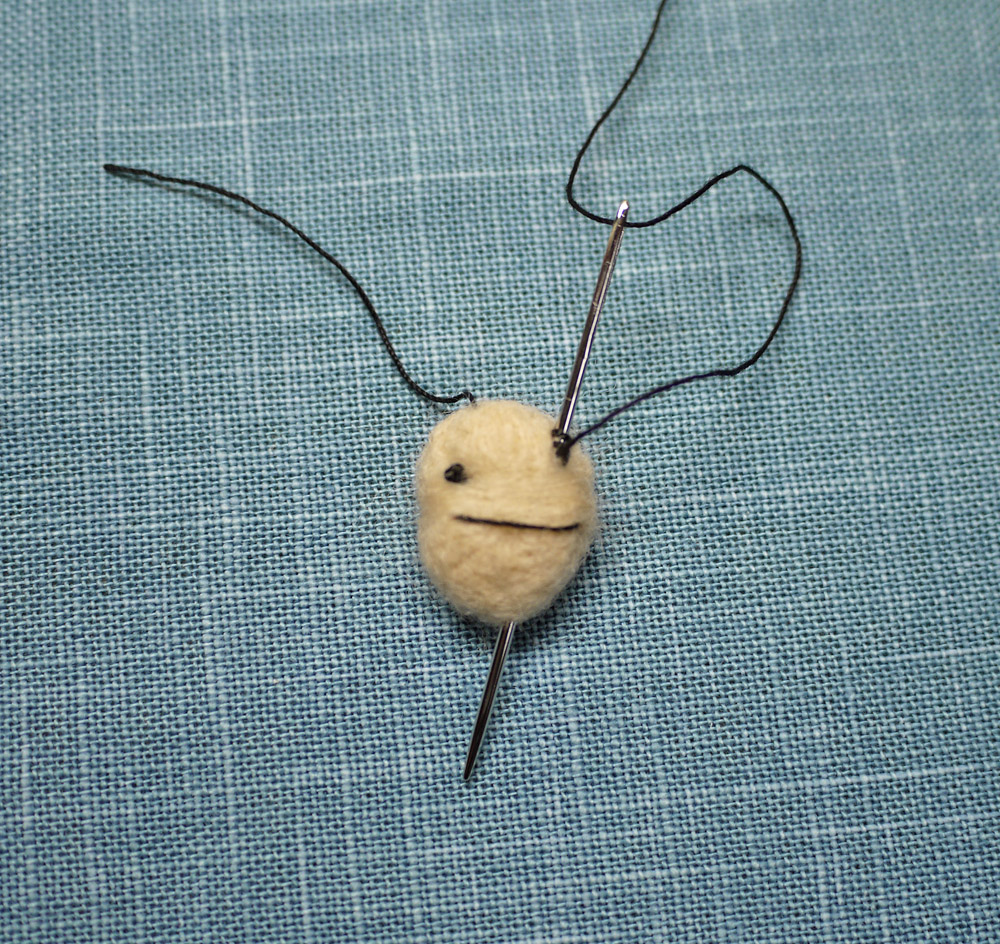
This wasn’t merely torture. I was making french knots for eyes.

In the end I enjoyed needle felting. I liked the way the wool roving transformed into a tiny nest of fibers. It was the opposite of untangling a knot. And I also really like stabbing at things.

Eventually, wooly snacks emerged. I like they way they smirk. It seems they’re a little salty.

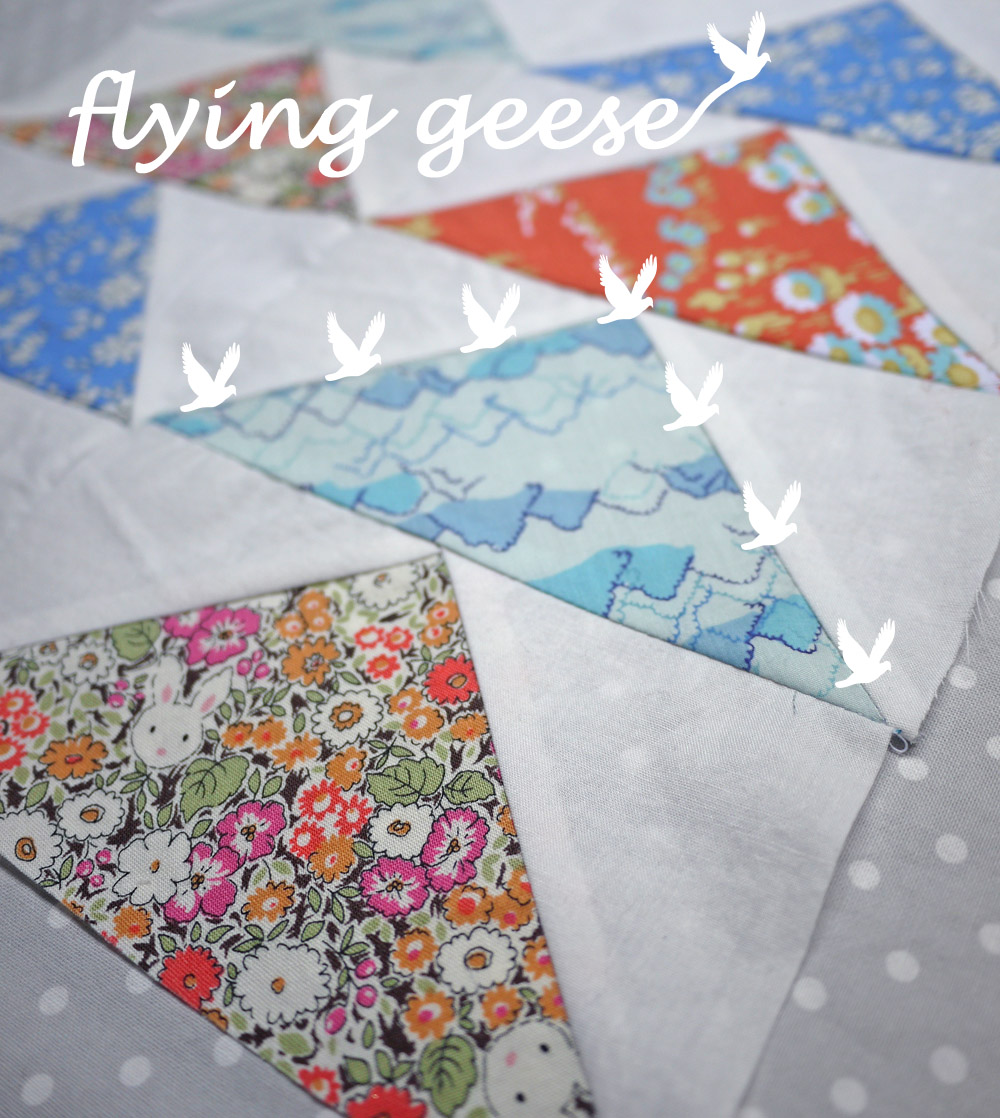
English Craft Club 7月8日: Flying Geese Quilts

The next English Craft Club class meets Sunday July 8th in Shinjuku Gyoen! This upcoming class is part of the American Quilt Series, and up this week is the Flying Geese block.

This block was fun to put together, and can be arranged in a variety of ways to create some interesting patterns. Come try it for yourself!

Finished quilt blocks can be used to create a placemat, decorate a tote bag or cushion cover, or save to add to a larger quilt. All project materials and light snacks are included. Cost is 5000 yen per person, or bring a friend and get a discount! The English Craft Club is open to everyone — men, women, both native speakers and those learning English. If you are interested in joining the class, please send an email to sakepuppets@gmail.com to register. Hope to see you there!

You can find more information about upcoming classes by clicking the links below. Thanks!

Sunday July 8th: Schedule
12:55  Meet at the Okido Gate at Shinjuku Gyoen
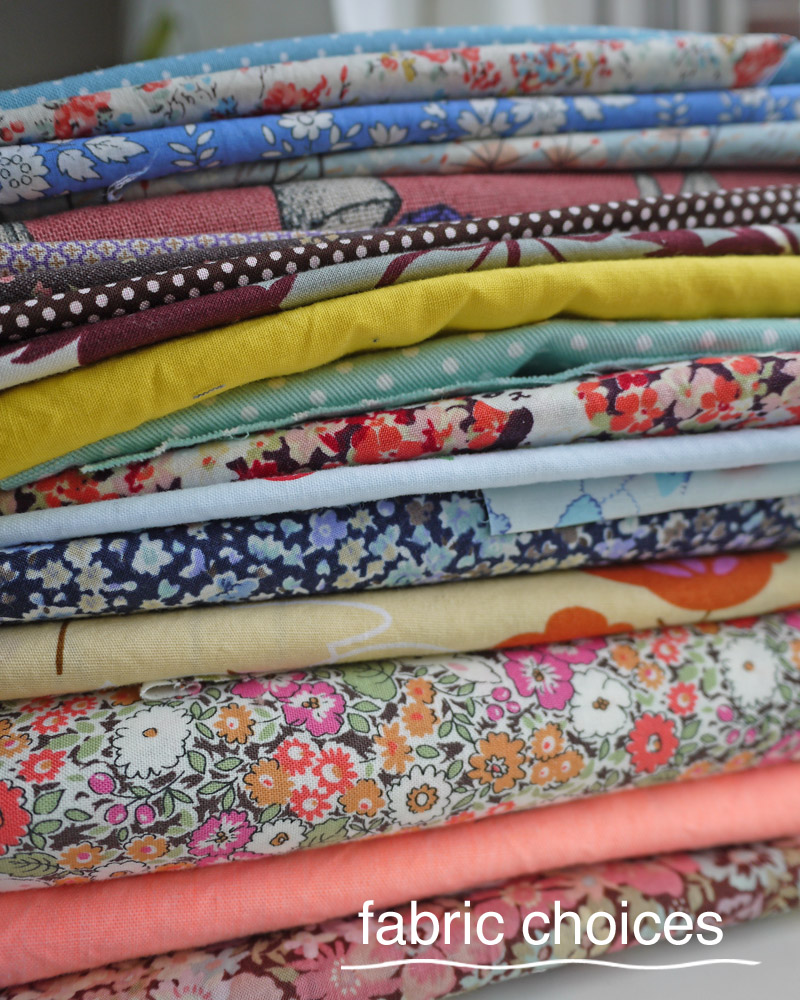
13:00  Class begins! Choose fabric and begin project
14:00  Break for snacks and refreshments
14:30  Class instruction ends, but feel free to stay until 15:00 to finish your project and chat with instructors and new friends

* * *

キルトを学びます。型紙の写し方、キルトのステッチをお教えします。キルトはテーブルに置くコースターか、トートバッグの飾りとして使えます。

計画
12:55 新宿御苑の大木戸門で集合
13:00 レッスンを始めしょう! 単語集を習ったり、ご自身で布を選んで頂きます。
14:00 休憩
14:30 ワークショップ終了。15:00までは講師が残っています。

含まれる材料:ご自身で選んだ布、糸、型紙、レッスンメモ

『The English Craft Club』は楽しく英語を勉強するクラブです。毎回のクラスごとに、皆さまに各自で作品を作って頂きます。クラフトをしながら、様々な表現や英単語を楽しく勉強していきます。

『The English Craft Club』に参加をご希望の方は、以下のアドレスまでご連絡下さい。ご質問もお気軽にどうぞ。(英語・日本語どちらでも結構です)sakepuppets@gmail.com

The English Craft Club 6月10日: Log Cabin Quilts

ミニログキャビンのキルトを学びます。型紙の写し方、ログキャビンのステッチをお教えします。キルトはテーブルに置くコースターか、トートバッグの飾りとして使えます。

計画
12:55 新宿御苑の大木戸門で集合
13:00 レッスンを始めしょう! 単語集を習ったり、ご自身で布を選んで頂きます。
14:00 休憩
14:10 レッスン再開
14:30 ワークショップ終了。15:00までは講師が残っています。

作るもの:ミニログキャビンのキルト
含まれる材料:ご自身で選んだ布、糸、型紙、レッスンメモ
場所:新宿御苑 (12:55大木戸門に会いましょう。)
参加費:¥5000

 * Update: I’ve got a doozy of a cold, so have decided to reschedule this class for another day. Sorry! かぜをひきますから、ワークショップを中止しています。ごめん!
Please join us for the next English Craft Club class, this Sunday June 10th in Shinjuku Gyoen! This week’s craft project is a mini Log Cabin quilt, which you can use as a placemat, decorate a tote bag, or save to add to a larger quilt. Cost is 5000 yen per person, and snacks and all project materials are included.  If you are interested in joining the class, please send an email to sakepuppets@gmail.com to register, or meet us at the Okido Gate at 12:55 pm on Sunday (a map to the class location can be found here). Hope to see you there!
You can find more information about upcoming classes and Facebook photos by clicking the links below. Thanks!

Sunday June 10th: Schedule
12:55  Meet at the Okido Gate at Shinjuku Gyoen
13:00  Class begins! Learn new vocabulary, choose fabric, and begin project
14:00  Break for snacks and refreshments
14:10  Continue working on projects
14:30  Class instruction ends, but feel free to stay until 15:00 to finish your project and chat with instructors

The English Craft Club: 楽しく英語!

On Sunday, May 27th, we’ll hold our next English Craft Club class in Shinjuku Gyoen. Please join us!  (For English, please scroll down)

* * *

The English Craft Club』は、刺し子やジュエリー作りなどを通じて、楽しく英語を勉強するクラブです。毎回のクスごとに、皆さまに各自で作品を作って頂きます。クラフトをしながら、様々な表現や英単語を楽しく勉強していきます。またあわせて毎回異なる身近なトピックスでの会話も行います。

参加費には以下の内容が含まれます:

  • クラフトに使用する材料(型紙、布、針、糸、ビーズ、その他道具)
  • 英語の教材(ペーパー)、クラフトの単語集など。
  • トピックス英会話(人気のカルチャーや質問。クラスメイトとアメリカ人インストラクターとのおしゃべりなど。)
  • コーヒー、紅茶、ホームメードのお菓子

『The English Craft Club』に参加をご希望の方は、以下のアドレスまでご連絡下さい。
ご質問もお気軽にどうぞ。(英語・日本語どちらでも結構です)
連絡先:sakepuppets@gmail.com

* * *

5月27日(日)13:00ー14:30

トピックス “In the Kitchen”

料理に使うタオルに刺繍をすることを学びます。トピックスはゲストを夕食に招く際の話や、あなたの好きなレシピ、アメリカのレシピ をメートルに換算する話なども含まれています。型紙の写し方、人気のある4種類のステッチをお教えします。これでお友達がきたときに、素敵なキッチンを見せられますね!

作るもの:キッチン用タオル
含まれる材料:タオル1枚、刺繍針と糸、木枠、ご自身で選んだ型紙、作り方、レッスンメモ
場所:新宿御苑(メールで地図を送ります)
参加費:¥5000

The English Craft Club is an English lesson disguised as a craft class — a fun way to learn and practice English while learning new craft skills. All craft materials, snacks, and English lesson notes are provided. Enjoy fun conversation and crafts with new friends!

Each class includes:

  • Craft materials, such as patterns, fabric, needle, thread, beads, tools, and much more!
  • English lesson notes, with craft-related vocabulary
  • English conversation topics and tips – chat about popular culture, ask questions, and have relaxed conversation with your classmates and American instructors
  • Coffee, tea, and homemade snacks
Please email sakepuppets@gmail.com to sign up for the class or if you have any questions (English and Japanese are both OK).

* * *

Sunday May 27th, 2012
1:00-2:30 pm
Shinjuku Gyoen

Topic: In the Kitchen!  Learn how to embroider a tea towel while discussing cooking. Topics include hosting guests for dinner, your favorite recipes, and converting U.S. recipe measurements into the metric system. For this class craft project, we’ll show you how to transfer a pattern onto fabric and embroider 4 popular stitches onto your tea towel, so you’ll have a beautiful kitchen to show friends when they come to visit.

Craft: Embroidered Tea Towel
Materials Included: one cotton tea towel, embroidery thread and needle, embroidery hoop, your choice of patterns, recipe, and lesson notes.
Location: Shinjuku Gyoen (map and location within the garden will be sent after registration is confirmed)
Cost: ¥5000

* * *

The English Craft Club is taught by two fun and energetic American ladies — Angela of Saké Puppets and Kim of The Cat’s Meow. Click here to learn more about them.

A Poppin’ Cookin’ Good Time

A friend and I had a “study date,” which means we watched Japanese animated movies and played with candy and pretended we were learning something.

Popin’ Cookin’ is childen’s DIY candy where the snacks you make usually resemble (and sometimes taste) like everyday foods — hamburgers, ramen, sushi. We tried the strawberry and vanilla flavor cake, ice cream and tart kit.

It came with everything we needed – mini sugar cones and tart shell, mixing tray and spoon, pastry bag for frosting, sprinkles, and the frosting mix. Just add water, and poof! Ice cream! sort of…

The mix smelled of pure sugar and strawberry Nesquik. Surprisingly (not really), I ate it anyway and it wasn’t nearly as sweet as I expected. It was maybe even a little bit good. Maybe. Just a little bit. Don’t judge.

I count this as studying because the instructions are all in Japanese. Maybe I read them, or maybe I just looked at the pictures … I’ll never tell.

We also made a panda cake, because, why not?!

First you draw the panda eyes and such with chocolate, following the pattern printed on wax paper. Then you top him off with vanilla “cake” mix which was more like pudding. I don’t have a microwave, so we put them in the toaster oven for a few minutes.

As you can see, one of us likes to color outside the lines.

Works in Progress: Picnic Quilt

Many of you guessed it…

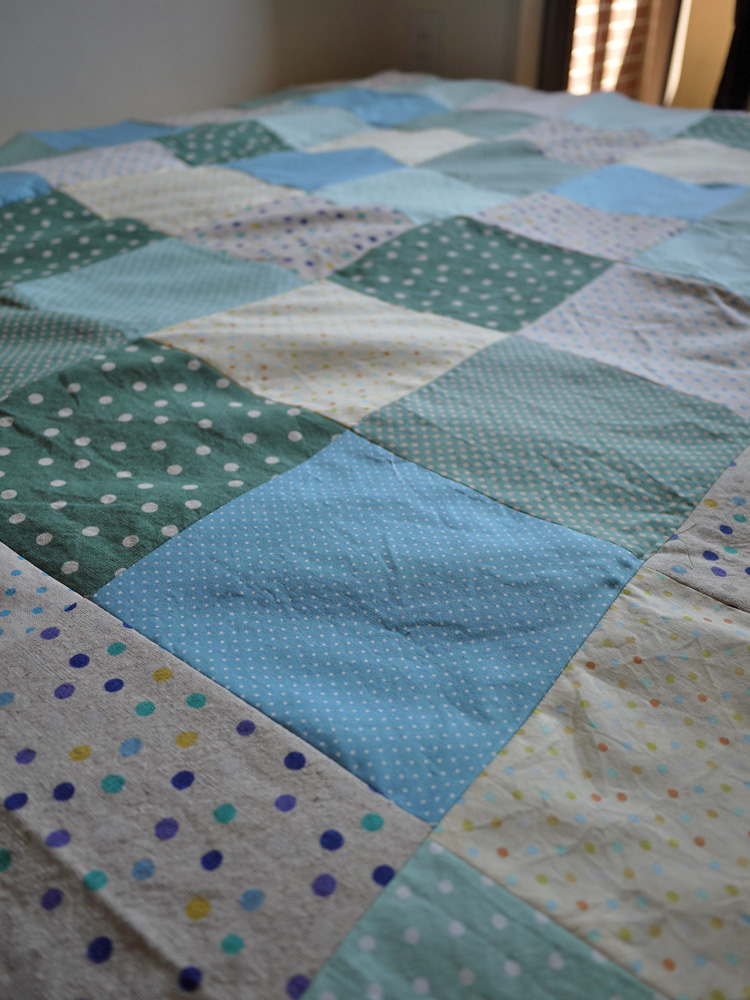
I spent a rainy afternoon piecing together a picnic quilt. Again, I’m a bit embarrassed to admit I had so many blue polk dots stashed away in my fabric closet — I had no idea I had such a polk dot problem. On the other hand, it was fun to simply decide to make something, have the materials at-the-ready, and sew it up in just a few hours. One rainy afternoon later, and the top is pieced and ready for quilting. Huzzah!

This quilt is too late for hanami season, but just in time for my summer English craft class series, 英語でCRAFT: The English Craft Club. More details on that coming very, very soon!

p.s. Thanks again to everyone for the kind comments re: my little write-up at BAB — it was a fun experience, and really encouraging to receive so much positive feedback. どうも!

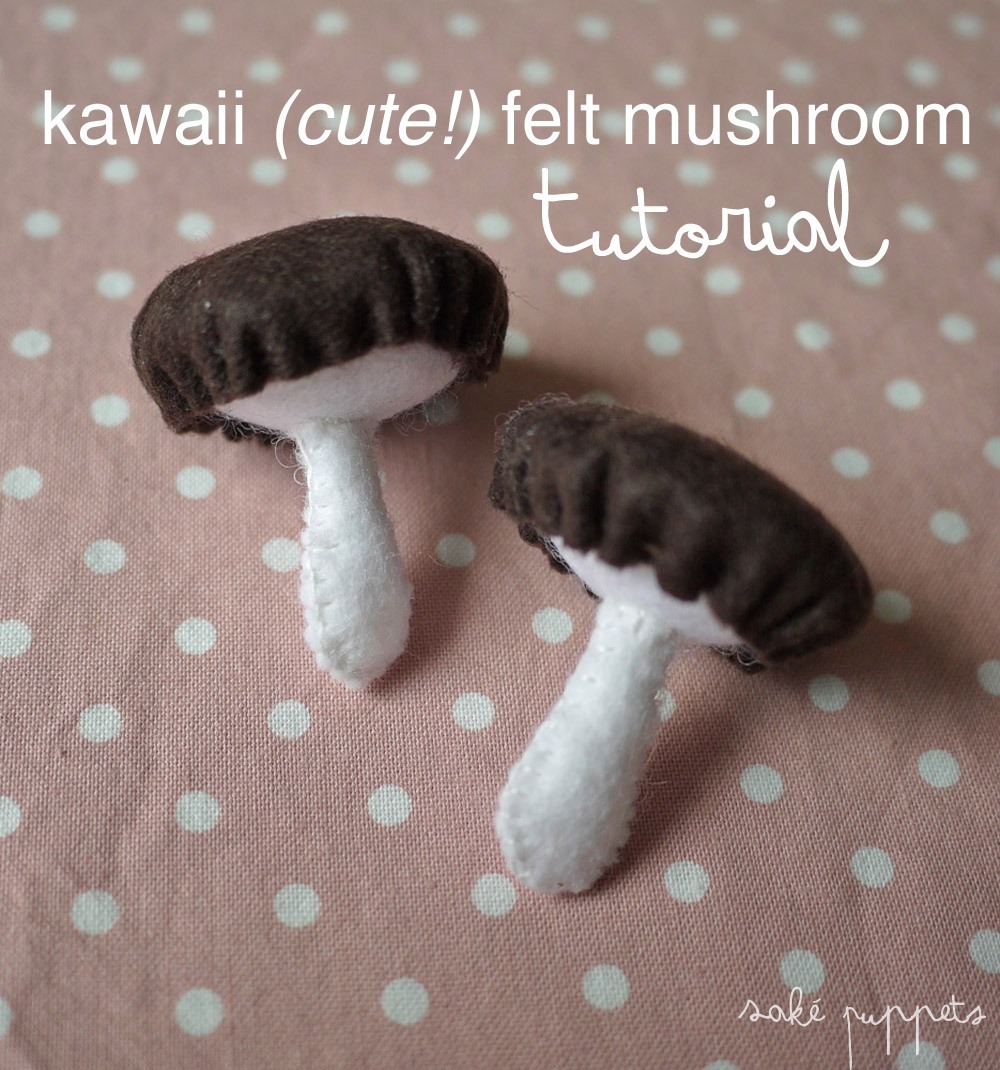
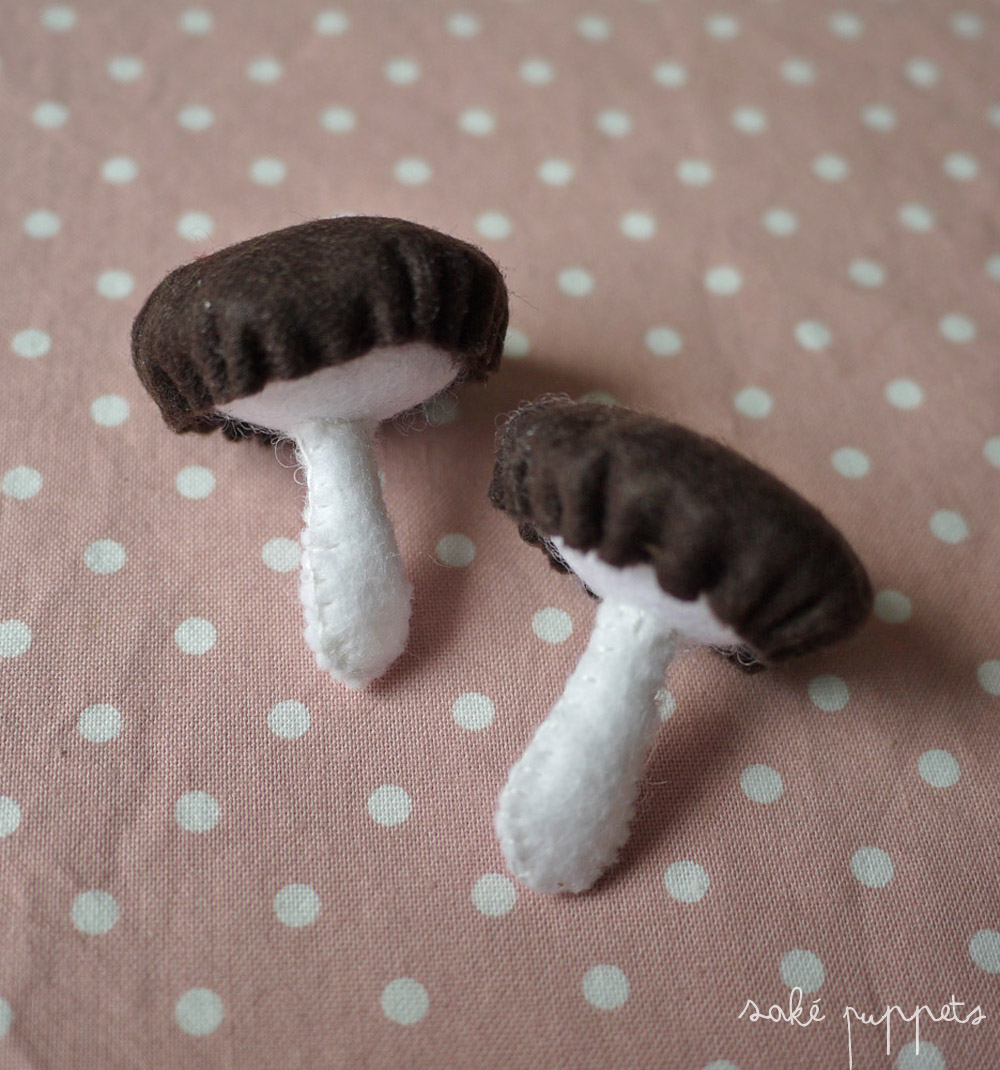
Kawaii (Cute!) Mushroom Tutorial

More vegetables are popping up…

This was the result of a rainy weekend in Tokyo. What was I supposed to do, study Japanese? Bah!

Some folks expressed interest in making their own veggies, so I thought I’d share a short tutorial. This mushroom pattern is super easy and comes from this book, which is from the Heart Warming Life Series and translates to “Full of Cute Vegetables and Fruits.” As I mentioned in my earlier post, these felt fungi stitch up quickly and are really satisfying to make — they’re maybe even a bit addictive. Consider yourself warned!

Kawaii (Cute!) Mushroom Tutorial

Here we go!

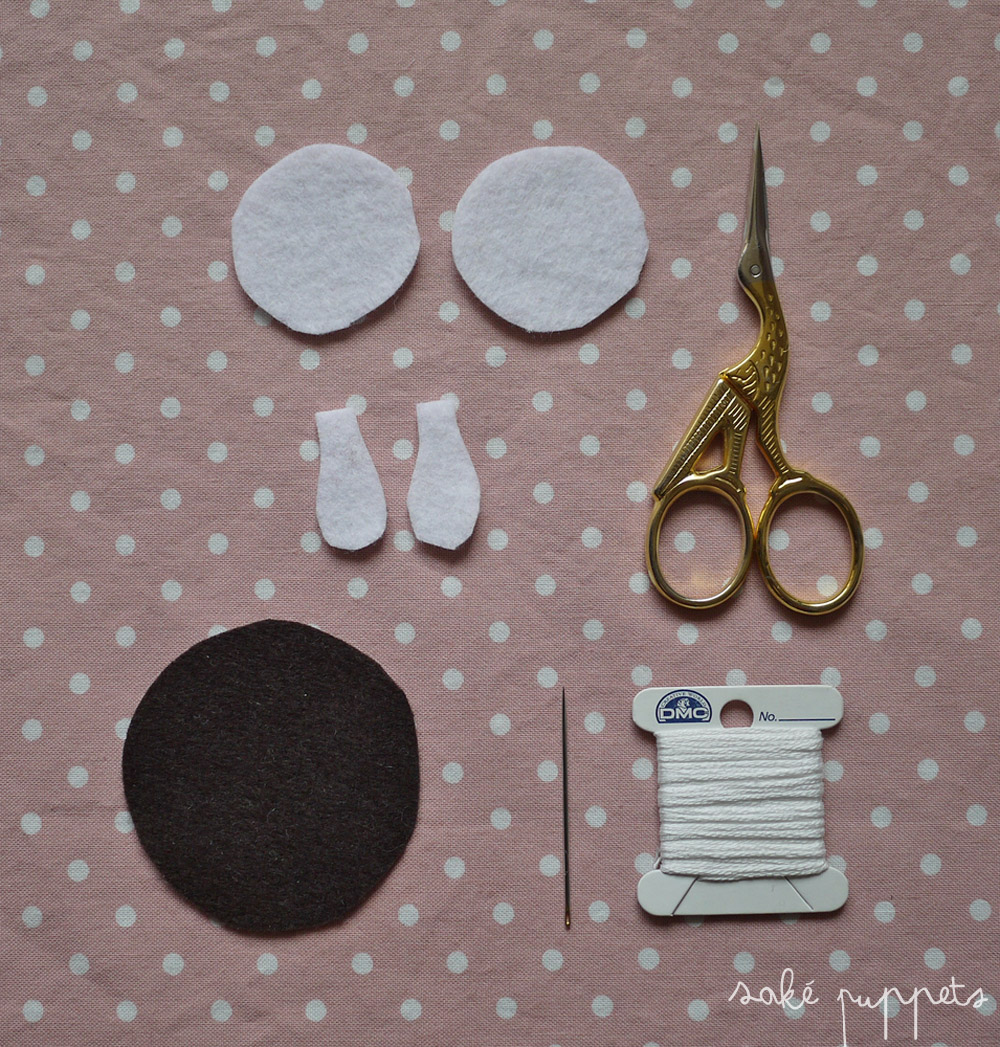
Gather your materials. You’ll need white and dark brown felt, a pair of scissors, a needle, stuffing, and some matching thread. I use embroidery floss because it’s what I have handy, but any thread will work as long as it matches your felt.

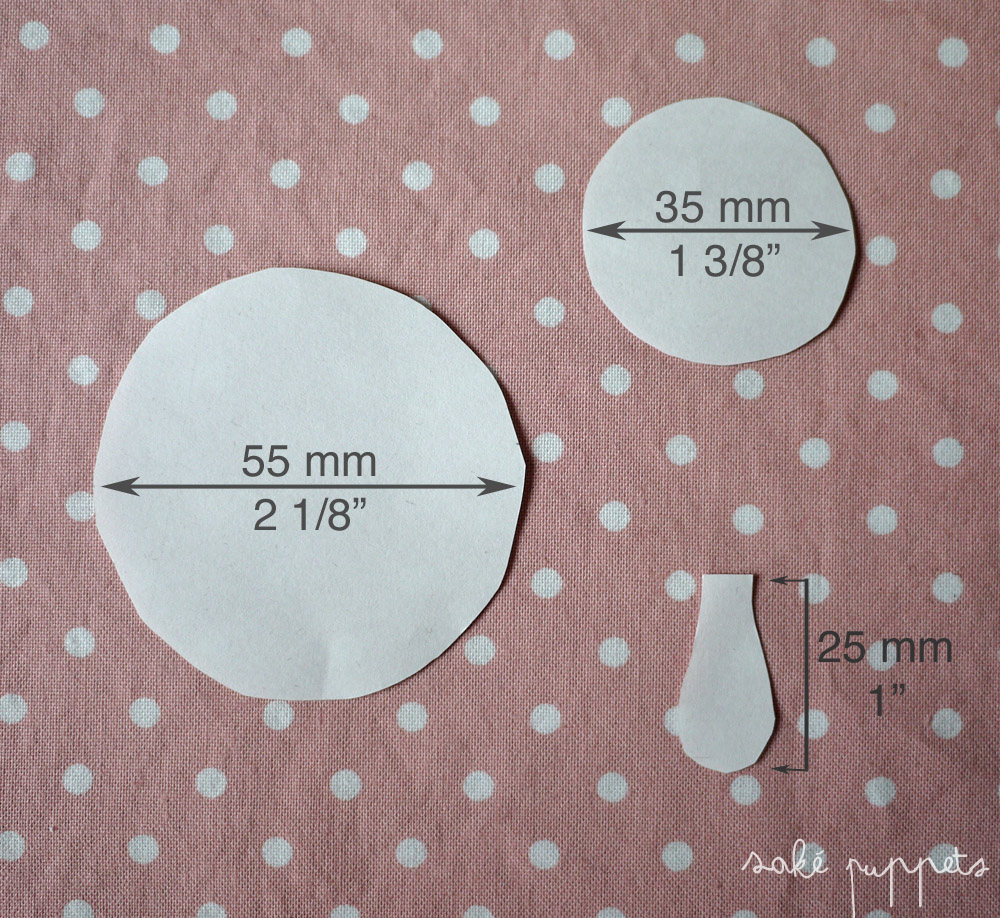
Cut out your felt pieces. I like to make a paper pattern first, and then trace around the pattern onto the felt. From the white felt cut out two circle “tops” 35 mm in diameter (1 3/8″), and two “stems” approximately 25 mm (1″) in height. From the brown felt cut one circle 55 mm in diameter (2 1/8″).

Assemble the mushroom. Stitch the two white circles together, sewing 3/4 of the way around the perimeter. Fill your mushroom top with stuffing, and then stitch the circles closed. Repeat this process for the stem, leaving a little tail of excess thread. I recommend using a blanket stitch, because it leaves a nice edge, but use whatever stitch you’re comfortable with.

Next, attach the stem to the top using that extra bit of thread. Make little stitches around the open edge of the stem, securing it to the top until it is nice and stable.

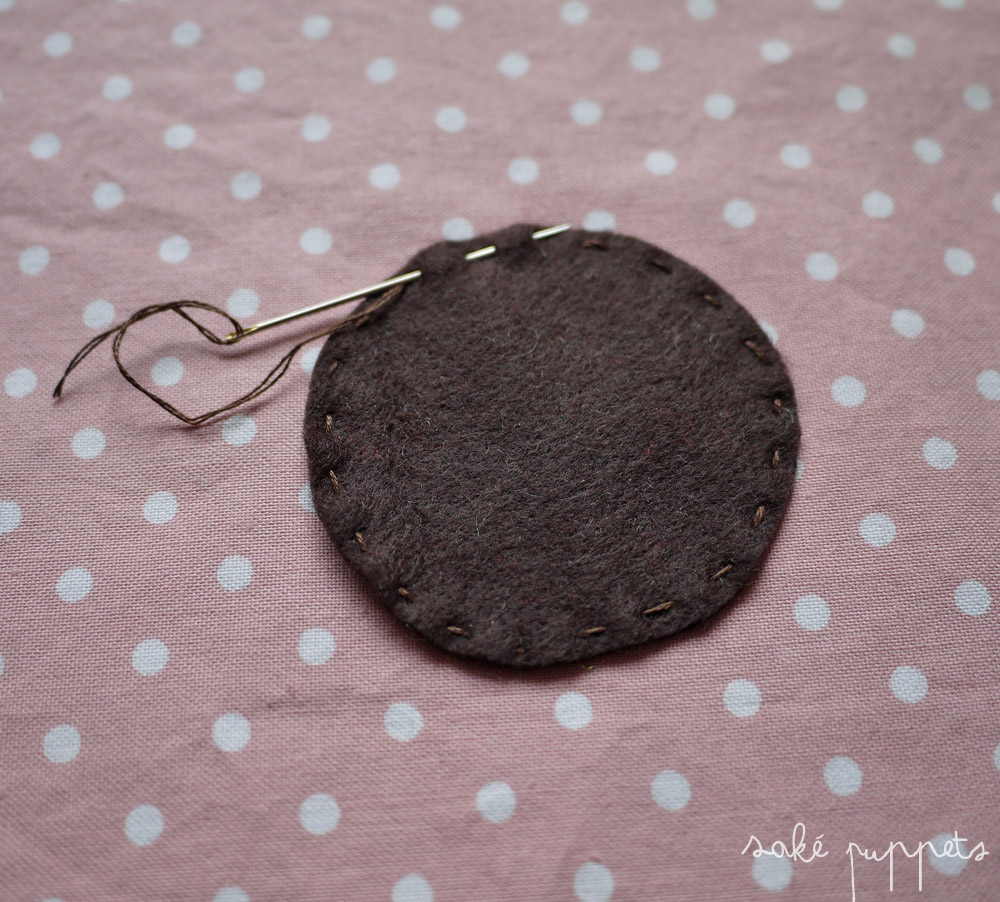
Make the mushroom cap. Stitch along the outside edge of the brown circle using a running stitch.

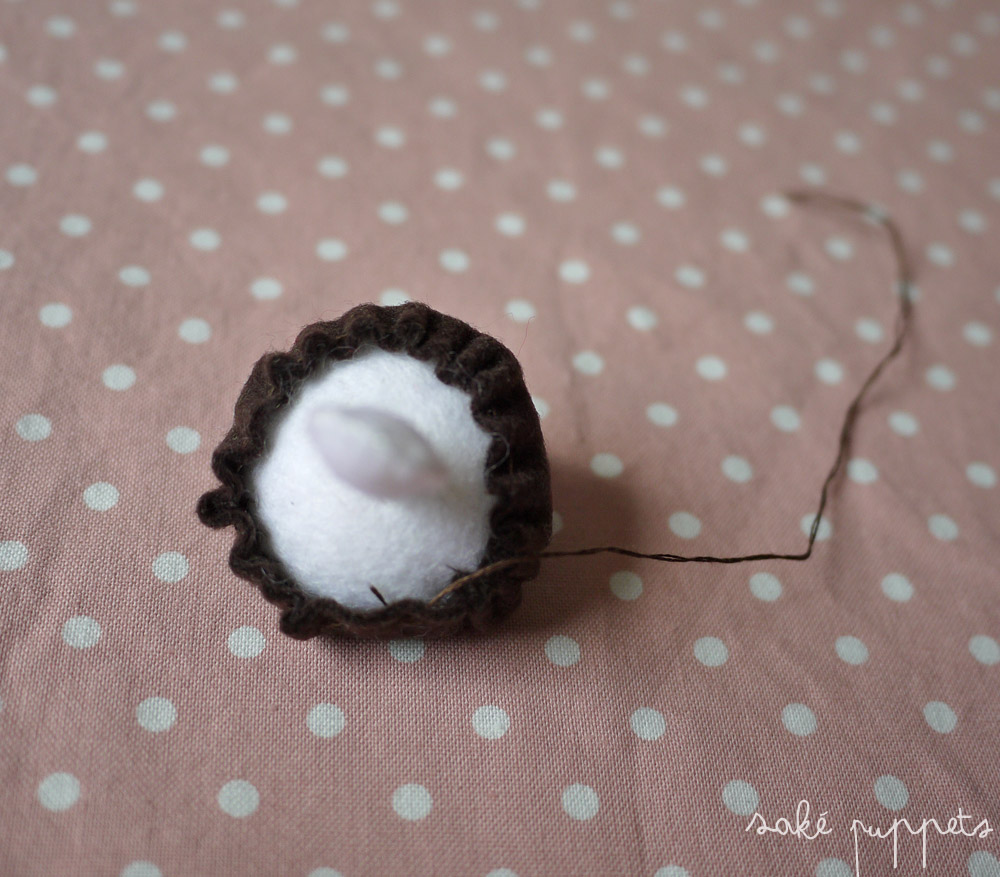
Now the fun part — gently pull your thread tight , and your mushroom cap should slowly take form…

Slip the assembled mushroom inside the gathered brown felt, placing the mushroom cap on top of the assembled mushroom like a hat. Continue to tighten the brown thread until the mushroom cap hugs evenly around all sides of the mushroom top.

Tie a tight knot and hide the tail of your thread inside. Nice work! Now make a few more, and watch your own garden start to grow. (@⌒ー⌒@)

In the spirit of sharing and caring, please don’t use this pattern for profit, and give credit to the book’s author when credit is due (前田 智美). Thanks! 

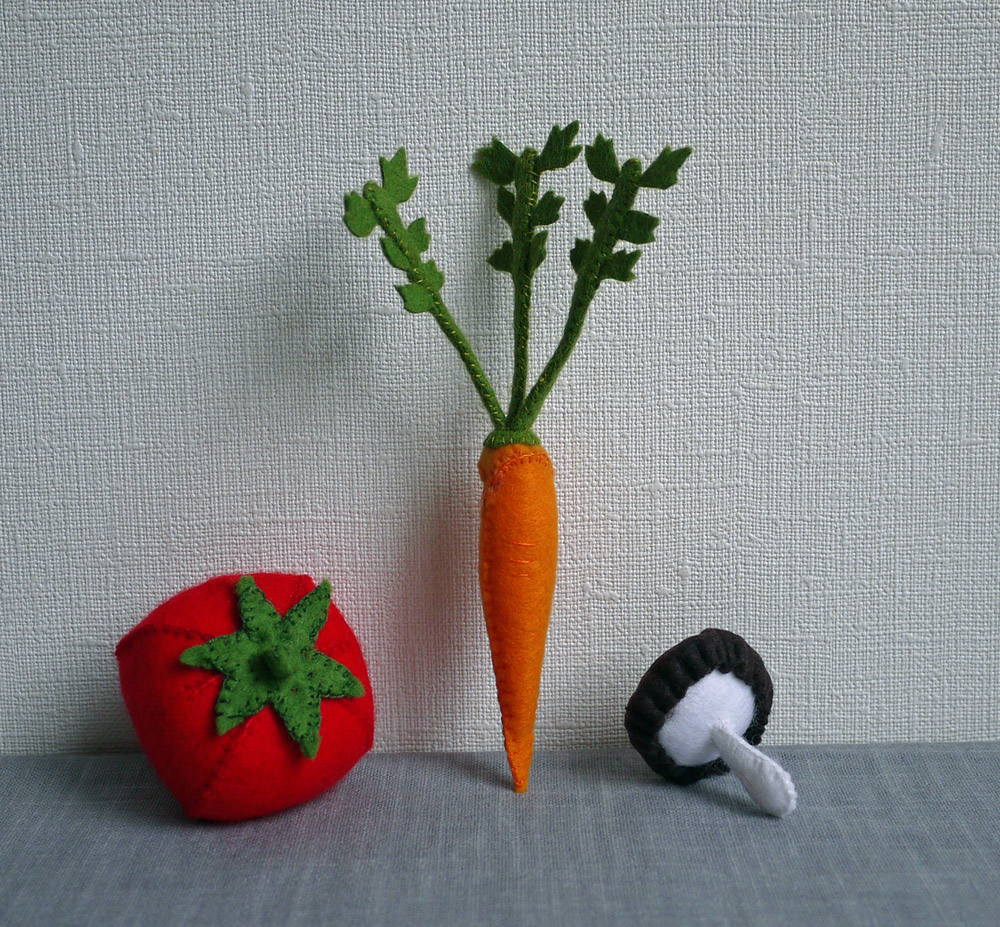
Look at my garden grow

I hesitate a bit to tell you how much time I’ve spent thinking about these vegetables this week. Because it makes me seem a little insane.

School has started up again, and all I can think about in class is how much I want to go home and sew my veggies. They’ve possessed me.

I think it is because they are incredibly satisfying to make — quick, easy, and in the end, totally adorable. Who thought a carrot could be so cute? I never did. I don’t even enjoying eating carrots (because I am still a 5 year old and pick them out of things), but sewing carrots is another story.

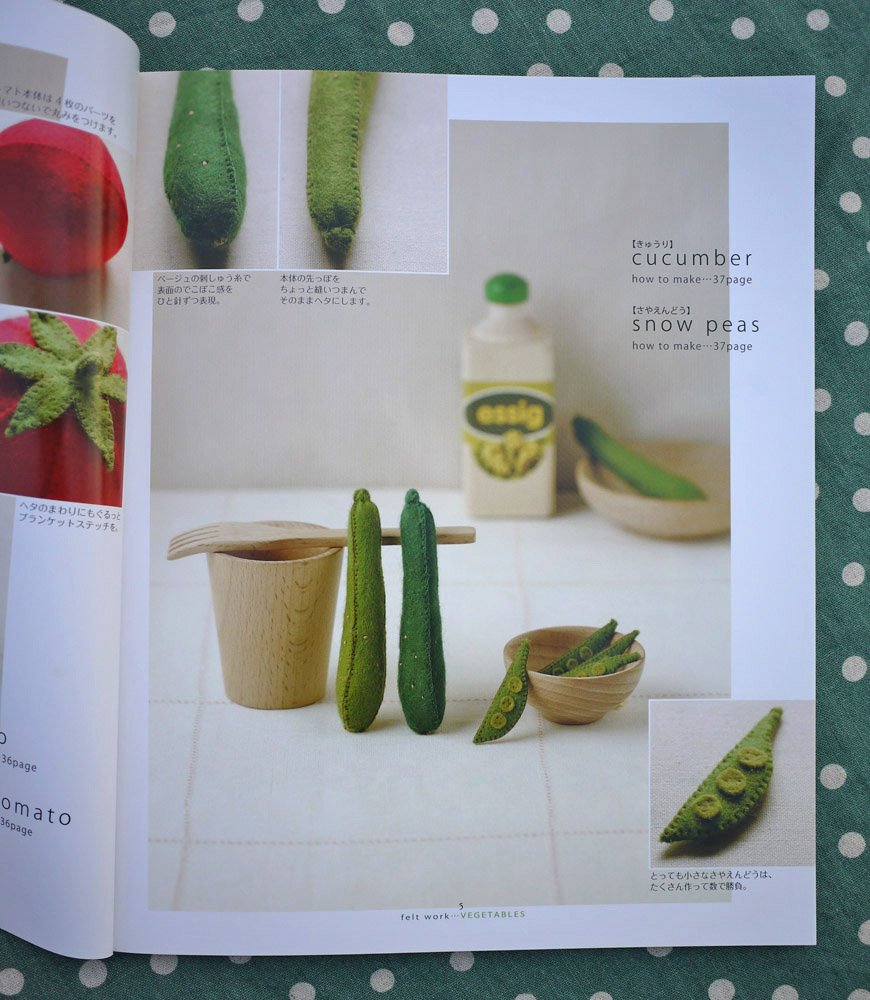
I made all of these veggies using this craft book I bought a few months ago, which has been sitting on my desk, begging me to open it. Laughing at me. Taunting me. “Look at how cute my fruits are!” it says to me in the middle of the night.

The title of this craft mook (regularly produced, somewhat cheap paperback books) translates to “Full of cute vegetables and fruits,” which is the absolute truth. It also promises that you can make everything inside using 20 sq.centimeter squares of felt, which are widely available around Tokyo.

The result is that some veggies turn out quite small, which was a challenge for my clumsy fingers.

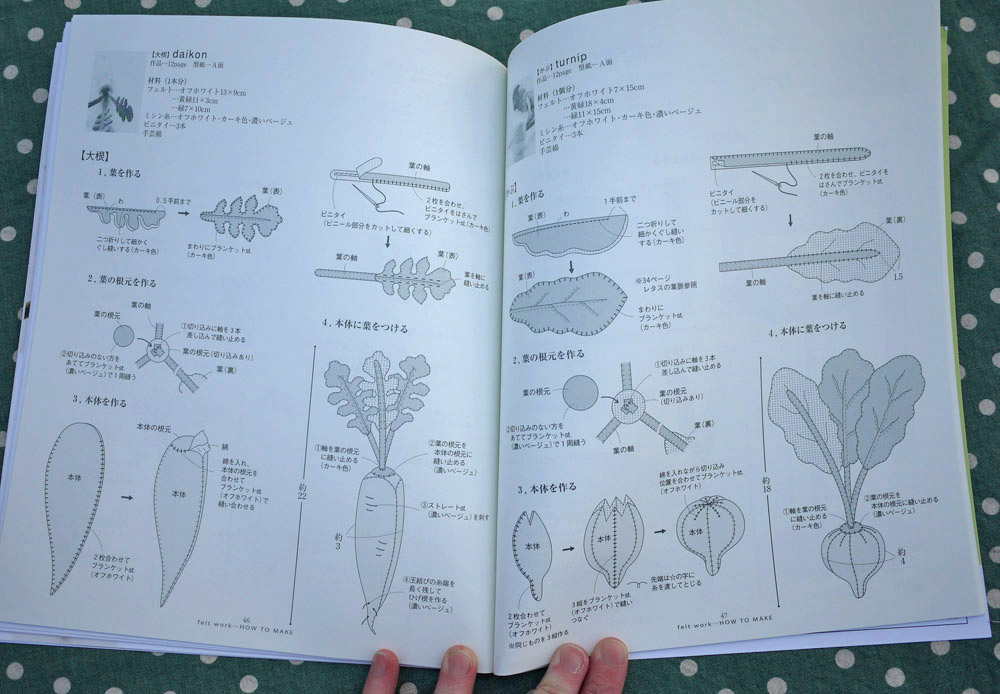
Let’s take a look inside:

The headings and project titles are in English, but all of the instructions are in Japanese. I find I like this, actually — I can read enough to get a general sense of what to do, but also forces me to do a bit of problem solving to make up for the Japanese that I can’t quite understand.

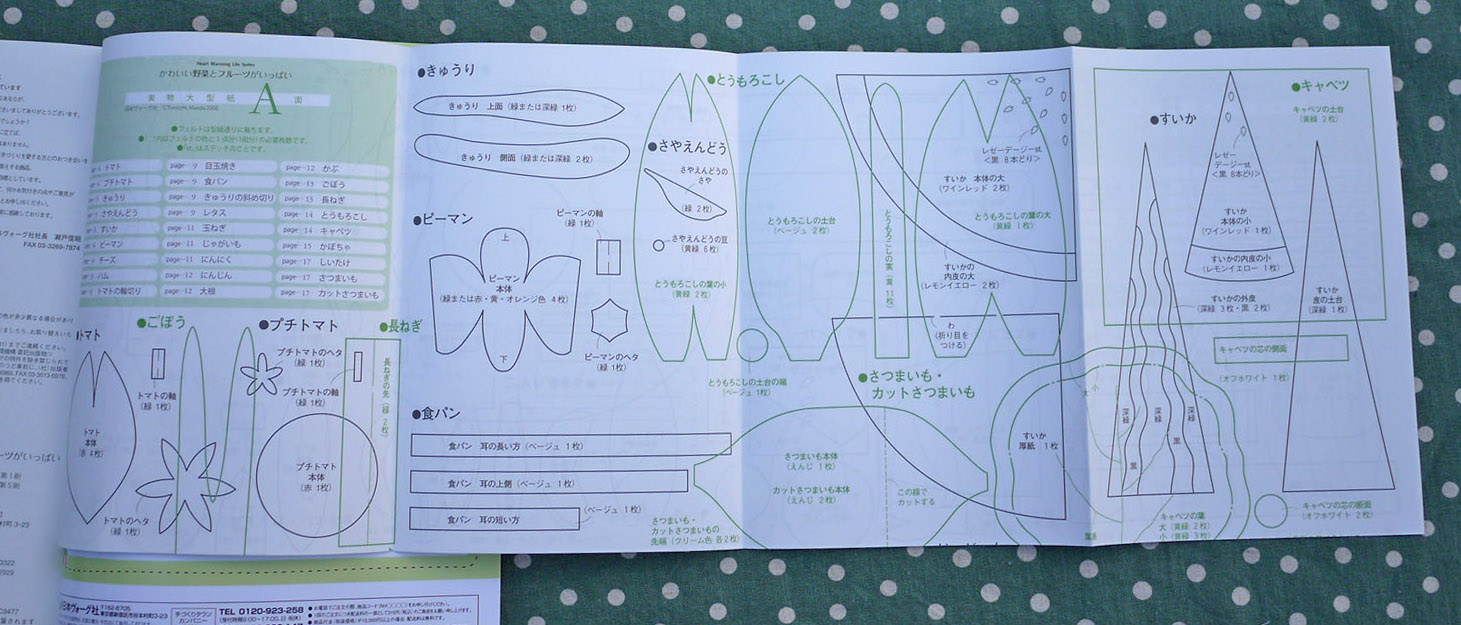
Each vegetable is represented in a full color photo spread in the front of the book, and in the back of the book additional assembly instructions guide you through the project. Patterns are printed on an additional sheet, which you tear out of the back cover.

I think they stretched the definition of fruits a bit by including these cakes, but who can complain once they see how happy they make this bear.

More photos can be found on Flickr. Have you made anything out of felt recently? Do share!

Spring Sashiko Giveaway — We have a winner!

Thanks to everyone who left comments — it was great fun reading them all! I dumped the numbers in to the random number generator, and (drumroll please!) dadadadada…

Congrats to Liz! And to everyone else, thanks again for participating. ヾ(@⌒ー⌒@)ノ

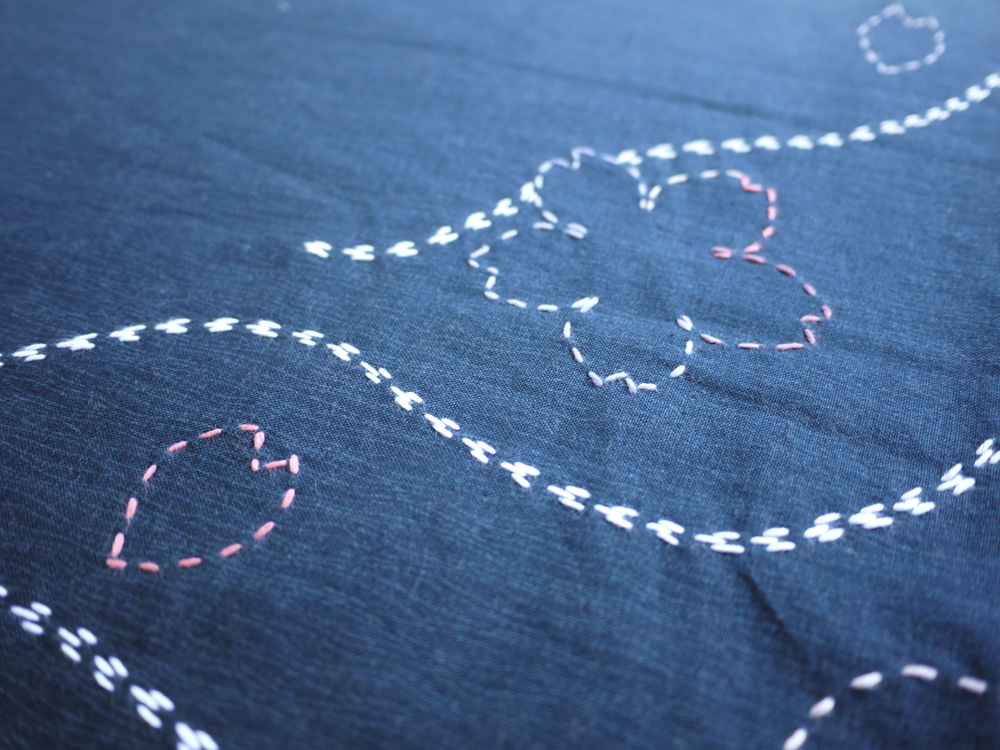
If you are still interested in getting your itchy-stitchy fingers on the Spring Hanami Sashiko Kit, you can keep an eye on my Etsy shop where it will be available soon or pre-order one by sending me a message at sakepuppets@gmail.com. Want to learn more about sashiko? You can check out my online tutorial here, or stay tuned for how-to videos, coming soon.

The 2012 Spring Hanami Sashiko Kit, $35  – – – – – – – – – – – – – – – – –

Happy stitching, and happy Spring!