Spring Sprung

Ahh, it feels like spring today. I hung some laundry to dry on the balcony and left the door wide open. The birds are chirping and blue sky is in sight (that is, beyond the power lines and skyscrapers).

I apologize to all my Minnesotan readers for my gratuitous boasting of springtime, since many of you probably still have snow on the ground in some places. OK, not really, but it is just so fun to jest.

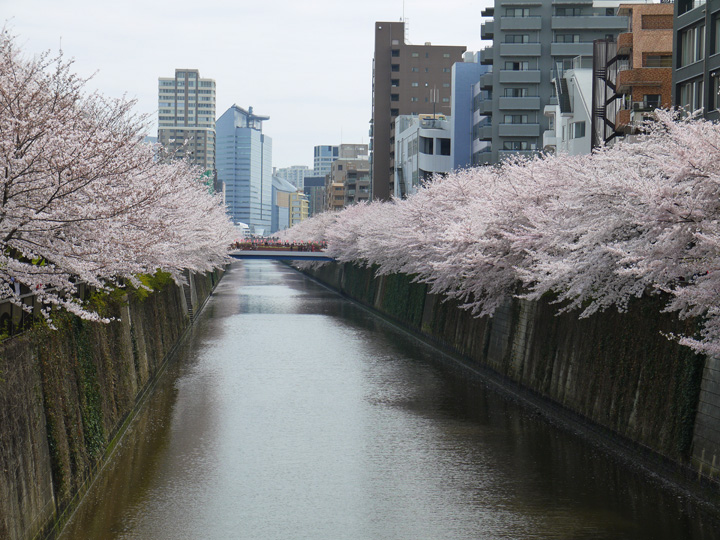
It’s hanami time in Japan, which means everyone goes outside to picnic under the sakura, or cherry blossoms. I went for a walk yesterday and saw two people picnicking with champagne at 2 in the afternoon. Rightfully so, the sakura are lovely — and fleeting — they deserve proper celebration.

On Sunday Dan and I took a walk along the river in Nakameguro, which is lined on both side with sakura that were in full bloom.

The sakura in Tokyo are almost gone, blooms coming and going in a matter of days. I’m hoping this weekend gets a little windy, because I love to stand under the cherry trees and let the little white and pale-pink petals flutter around me. Perhaps it reminds me of snowfall in Minnesota.

OK, you’ve got me there.

Sashiko! Sashiko! Rah rah rah!

It’s true, I was a cheerleader in high school. I’m pretty sure I was pegged as the grumpy cheerleader (bookish introverts probably shouldn’t be allowed on the squad), and I would have worn motorcycle boots with my uniform if they had let me.  But I digress.

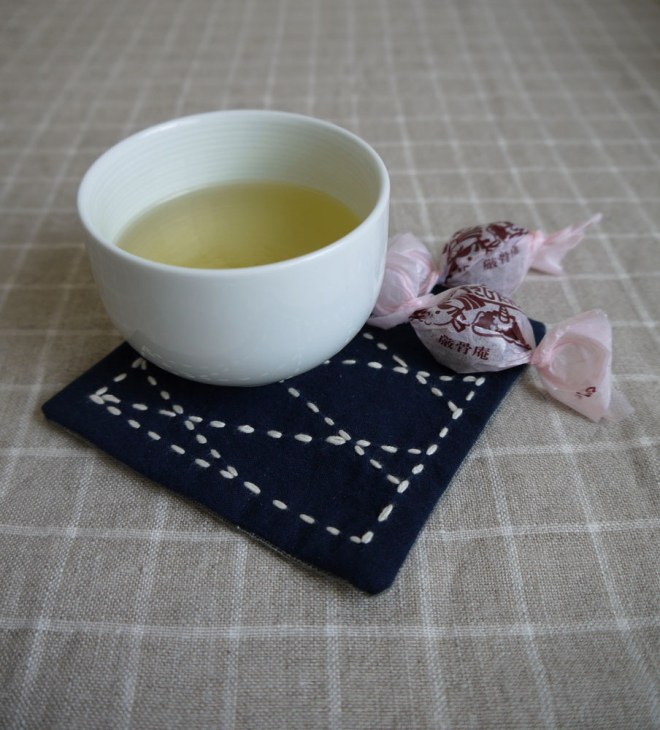
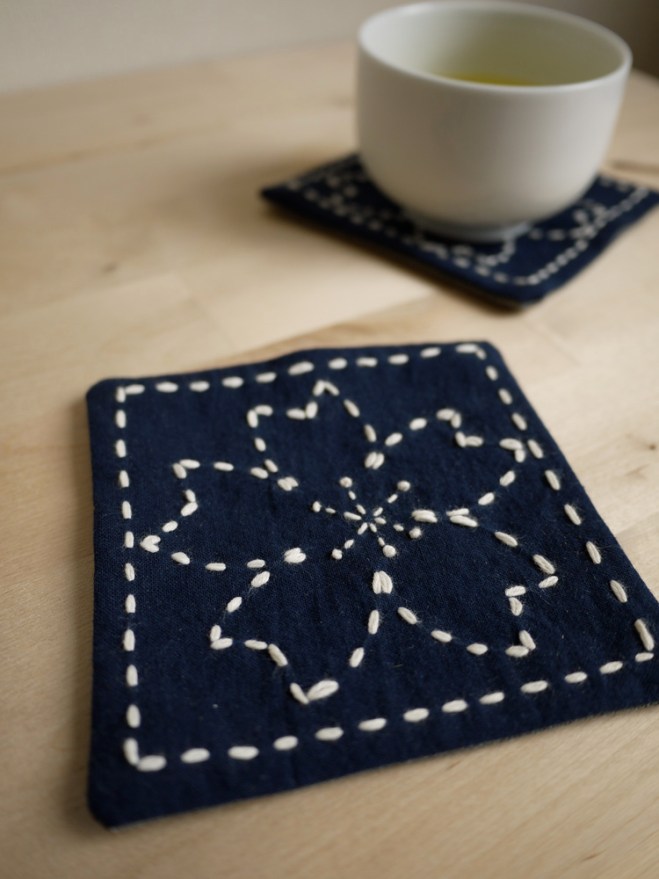
I can’t help but cheer because my sashiko kits are finally up in my web shop, and I’m really excited.  I’ve been working on these kits for the past few months, and I’m happy to finally share them.  I designed the patterns and created illustrated instructions detailing the techniques I learned from my snappy old-lady friends in sashiko class.  Let’s take a peek:

I tried to marry traditional Japanese aesthetic with modern design and materials, which is probably how you could describe my taste at the moment.  Every dish and towel in my kitchen is indigo and white, and everything else in our apartment is either white, wood, or Muji-tan.  I find it simple and refreshing.

These coasters are also great because they provide almost-instant gratification for the busy crafter.  They take hardly any time to make, and class-up tea cups tenfold.  A few of the kits are geared for beginners and a few for more experienced needleworkers, but I’m happy to answer questions and do some virtual hand-holding for anyone wanting to learn sashiko and jump in head needle first.

I’m now moving on to a second batch of designs (on top of my Action Craft quilt project, which is still a sizable heap of scraps), so if you have pattern requests, let me know.  S – A – S – H – I – K – O!

Maybe that one needs some work.

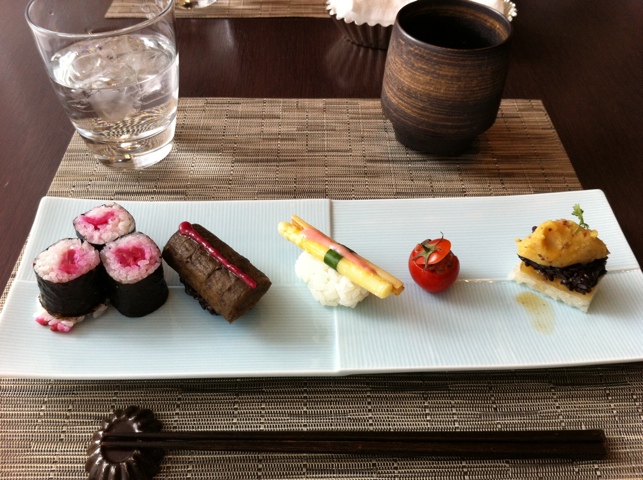
Name That Sushi, Updated

As much as I’d like to admit I ate sea urchin vulva, spoppy, that’s not quite right.  Though, my dad’s guess of yellow-crunchy-stuff is pretty much spot-on for most things I eat here.

I can’t remember all the details from my lunch at Vegetable Sushi Potager, probably because I ate those little niblets quickly.  Here is what I do know, from left to right:

1. OK, rough start, I don’t remember this one.  It was a roll of something vegetable-y. Then gobo, aka burdock with ume sauce; white asparagus; stuffed teeny tiny tomato; and sweet potato mush with apple on black rice.

2. Curry with tomato; grilled erengi mushrooms; carrot puree; grilled leek-like negi; and tomato with mozzorella and roasted red pepper sauce.

Yum?  Yum.

******

Can you name that sushi?

A special prize to anyone who can get all 10 right.  But I’m pretty sure you can’t.  Mwaa ha ha…

Action Craft and #Quakebook

First things first — thanks for all the interest and support for the Action Craft Blankets for Japan project!  It sounds like we’ll have quilts and knitted blankets coming from all over the United States, which is great news.  I’m very touched by all the kind words and generosity, and excited to see what everyone sends over!

A few people have asked what they can do for Japan even if they don’t craft.  Money never hurts.  There are a lot of organizations sending aid into Japan now, so I suggest looking around for one with a mission that you feel strongly about — food banks, temporary shelters, architecture and design for rebuilding, medical aid — check here for many options.

Another great project is #quakebook, a Twitter-sourced compilation of stories and images from earthquake and tsunami survivors,  available soon as a digital publication and later in print.  All revenue from the sale of the book go directly to the Japanese Red Cross Society.  For more information on 2:46: Aftershocks: Stories from the Japan Earthquake, check out the link here.  A friend has been working like crazy doing the editing, and I’ve heard nothing but positive things from her about the experience.  Sounds like an interesting project, so I encourage you to check it out.

Life in Tokyo is settling down again.  Lights remain dim, about half of the escalators and vending machines around my neighborhood are turned off.  The local grocery store limits bottled water to one-per-person, but there are plenty available for purchase.  Milk, eggs, bread and rice have all returned to store shelves.  Earthquakes are less frequent, which makes me wonder if they are back to their usual frequency though I’m just more attune to them now.

I’ve returned to my usual daily duties, running errands around town without difficulty.  Dan and I were even lucky to visit Nagoya this weekend, where we stayed with a friend and her parents, visited festivals, found cherry blossoms in bloom, and ate our way through the weekend.  It was really fantastic, and I promise to post more details and photos soon.

Until then, a glimpse of Spring…

Action Craft!

I’ve been back in Tokyo for a few days now.  From my walks around the neighborhood, it is hard to say whether it is quiet or if it’s just my imagination.  Dan reports business as usual at his office, though says his coworkers are less lively than normal.  We both get the feeling that people just aren’t going out as much, instead staying home to conserve energy and resources.  Tokyo with its lights off feels a little sad, though it seems temporary.

I’ve been thinking about what I can do to help.  I want to head north, pick up a hammer or lug boxes, but right now it’s best to let the trained aid workers do their thing without interruption.  And who are we kidding — if I went now, I’d be a blubbering mess.  Those who know me know that I’m pretty good at crying.  I can’t help it, I’m a weeper.  Emerging stories by survivors are amazing and necessary, but heart-wrenching.  Right now, I can help everyone by helping from afar.

I thought about sending a percentage of the proceeds from my web shop to a local charity, but I decided I didn’t want my giving to be dependent on how much I sell.  I’d rather just give something, no strings attached.

Then today it hit me — I can stitch.

Before I moved to Japan I bought this book, Quilting for Peace.  It includes stories about people making quilts for survivors of tragedies, and about how small quilts and blankets, when given to people in need, provide enormous comfort.  I remember one story in particular — about a group of women who made small quilts for their local fire station to have at the ready when a family lost their home and everything in it.  Imagine standing on the curb watching your house go up in smoke, and someone hands you a homemade blanket rather than one of those scratchy synthetic ones.

So that is what I can do.  For now, at least.

And then it occurred to me — I’m a crafty gal with crafty friends.  I bet if I ask nicely, a bunch of you could do the same…  How about it?!  Let’s make some blankets!

Interested?!  Great!  Here are the details —

The plan: Make small kid-sized or lap-sized blankets to send to an evacuation shelter, hospital or school in a tsunami-affected area of Japan.  I’ll do the research, and maybe recruit my Japanese friends to help me find a location.  I’ll keep you all informed as plans develop.

What you, crafty friends and family, can do: Make a small blanket and send it to me.  I know some of you quilt, others knit or croquet — anything works!  Think roughly 36 inches by 48 inches (90 cm x 120 cm), try not to go bigger than that, smaller is OK too.  Be creative!  Feel free to use up scraps!  Tied quilts, machine-pieced, embroidered or not, whatever!  This is a great excuse for those of you who have been wanting to try quilting.  If you need help, send me a message and I’ll walk you through it.  I’ll also try to dig up some tutorials and easy patterns. (For starters, check here.) Please send your blanket freshly washed.

Also, include a hand-written note for the recipient.  Tell them where you live, send a photo or drawing if you’d like.  I’ll translate the notes, gather the goods, and see that they are delivered to a proper location.  If you fancy, I’ll also take photos of the blankets to put on this blog, so everyone participating can see what’s been sent and share encouragement.

Let’s keep this quick, and shoot for a deadline of one month from now.  Try to place your blanket in the mail by the end of April, bonus points if you can get it to me by the 30th.  For questions or a shipping address, contact me at sakepuppets(at)gmail(dot)com.  Also, why don’t you leave a comment and tell us what you’re working on!  All are invited to participate, old friends and new!

Good luck, happy stitching, and がんばって!

Flee-ting Thoughts

Last week I drafted an ornery blog post, but then hit delete. It was on the topic of fleeing Japan. As I sat in my hotel room in Beijing, the stories popping up in the news about foreigners fleeing in the wake of the earthquake/tsunami/nuclear crisis made me increasingly agitated. I sheepishly admit, I took offense.

When I hear the word “flee,” I envision people running. You flee from a fire, or Godzilla. People had to flee the tsunami, as in, they had to run so the gigantic black wave didn’t swallow them up. I did not flee from anything. I took a train, and calmly stood in line, and then I sat around in the airport for a couple hours. I played solitaire on my phone. I packed smartly for a week-long sightseeing trip. I’m not abandoning anything or anyone. I’m not fearful.

But the headlines about foreigners fleeing Japan got to me. I feel silly for admitting it, since there are more important issues at hand. Last week I vigorously typed my retort, but decided not to post it because, really, I don’t need to justify my actions to anyone, nor do I need to pick a fight with the internet. I tried to let the issue go and instead focus on something productive.

Then today I came across this article in TimeOut Tokyo. It conveys many of the same feelings I’ve been having — though in a more concise, less ornery manner (and props to my friend Sandra, who is quoted). So rather than retype the sentiments, I’ll just encourage you to follow the link and then add a “Yeah, what he said” to the end.

What I’m Watching

I thought I’d throw a quick post out to share some of the resources I’ve been watching for news.  It’s been my feeling that for information on Japan, it is best to ask Japan.

First, I’ve been keeping an eye on Twitter where folks are translating NHK news in real-time, particularly televised press conferences given by Japanese government officials Prime Minister Kan and Chief Cabinet Secretary Edano.

My favorite tweeters have been TimeOut Tokyo and SandraJapandra.  They are passing along good, reliable information.

NHK World has also been streaming a translated news broadcasts online.  Very useful.

The Japan Times now has a website up with a growing list of resources.  Every once in a while I peek at the Japan Meteorological Agency for a visual of aftershocks.

I’ve also kept my eye on the US Embassy’s website, and follow Ambassador Roos’ Twitter feed.

I have not been watching any foreign news, and actually hadn’t seen any until I turned on the BBC in my hotel room this morning.  I was astonished and horrified by the images of body bags and the focus on death.  That is not something we were seeing on NHK in Japan, nor did we need to.

Right now the focus is on rescue and recovery.  Most sources are recommending that those in non-affected areas donate cash rather than goods, and to keep out of the way for the time being.  (For ways to donate try here, scroll down a bit.)  Edano has called for everyone in Japan to conserve electricity, an effort most were taking seriously in Tokyo.  All available resources are being directed north.

Many people are asking me what I’m doing.  Right now… not much.  I feel very helpless.  Dan and I are in China temporarily, where he has some work to do.  I have discovered that many of the tremors I was feeling weren’t actually the ground shaking but my imagination, since the feeling has followed me.  I’ll hopefully learn more in the future about what I can do, or build, or donate.  But for now, we wait.

Tough Decisions

At a time when many in Japan are suffering — without basic necessities, missing loved ones, under constant threat of more disaster — it seems silly to talk about my worries.  I fear that talking about them will somehow trivialize the tragedy that has occurred.

At the moment, Tokyo is not in any danger.  That being said, Dan and I have a difficult decision ahead, one many ex-pats currently face: do we stay or do we leave?

Right now, my heart belongs to Japan.  Tokyo has finally started to feel like my home.  We have been here for 9 months, and though I’m a somewhat transient lady, this is where I prefer to hang my hat.

I know I am incredibly lucky — I am an American and have confidence that my embassy would help if there was an emergency.  I have friends in many countries, and Dan has a solid job with a company with resources. I do not feel I would ever be stranded or forgotten. I know how extremely lucky I am because I had the resources to move to Japan in the first place.

But, we have the opportunity to take a little break from Japan for a while.  Do we stay or do we go?  As the situation at the power plant becomes more threatening it becomes easier to make the argument to leave.  But at this point Tokyo is not in danger.  And Tokyo is my home.

Some foreigners have been criticized for leaving, criticized for inducing panic or abandoning Japan in her time of need.  What can I do to contribute if I were to stay?  I can donate money, but otherwise I must sit and wait.

Leaving Japan is a personal decision and no one should be judged for doing so.  Whether for the safety of your kids or the sanity of your nerves, taking a break from the drama shouldn’t be viewed negatively.  Alternatively, no one should be criticized or harassed for wanting to stay.  News coverage in the United States has been more sensationalized than here in Japan, and frantic calls from abroad help no one.  We are aware of the severity of the situation, thankyouverymuch.  I’m a smart lady with smart resources, and can make the right decision.  Most importantly, it is the right decision because it is my own decision.

So then why is it so hard to choose, and why do I feel so bad?

It might be guilt, or adrenaline withdrawal, after being so close to a disaster and narrowly missing its wrath.  It might be the solidarity I feel with my new friends in Tokyo and the life I have here, a solidarity I feel I’d be abandoning.

And so, we’ve decided to leave.  It is sad to go, but it is a short trip and it feels like the right thing to do at the moment.  Hopefully my absence from Tokyo can help conserve energy, resources… anxiety.  There are difficult times ahead for Japan, and I’m in it for the long-haul.  Even if I’m not for the short.

You can see my other reactions to the Tohoku Earthquake here and here.

Aftershock

It has been 2 days since the earthquake struck Japan.

Tokyo is somber.  Things here are mostly fine — there was little damage and much of city life has resumed.  Around Azabu Juban trains are running, restaurants and shops are open, and people are walking about.  Twitter reports from around the city reveal similar scenes.

Dan and I have been out walking, but haven’t strayed far from home.  The aftershocks continue, and though the tremors aren’t as big as they were yesterday, I still don’t have any desire to get on a train.

We stopped at the grocery store mostly because we felt we should, but I didn’t know what to buy.  Yesterday eggs and bananas were out, today our nearest grocer was lacking toilet paper, milk, and leafy greens.  I bought a few onigiri from a nearby conbini and felt satisfied in my preparedness.

The grocery stores were bustling but restaurants were not.  We went out for Chinese food and had the restaurant to ourselves.  I half-joked that we should eat out while we can, and save the veggies at home for the coming days.  The truth is, I’m not sure what to expect this week.  Authorities say Tokyo will intermittently be without power and are asking everyone to conserve electricity.  Prime Minister Kan said in a televised press conference that this is the worst disaster to hit Japan since WWII.  Dan and I shut off our heat and are snuggling around a shared lamp.  They’re asking us to prepare for scheduled power outages, but I’m not certain what that means.  We’re making some rice to stash in the fridge, we’ve got food and water.  Being without a television for a while will probably do me some good.

In the past 48 hours I’ve become a total news junkie.  In addition to my Twitter feed, which is in constant refresh on my phone, I’ve had email and Facebook, online news channels, and NHK TV at my fingertips.  Though, the images of devastation and the anxiety of another tremor are starting to wear me out.  (Mom, look away…)  The Japan Meteorological Agency said there is a 70 percent chance of another earthquake greater than magnitude 7 occurring within the next three days, and then 50 percent chance in the 3 days after that.  I feel safe in my apartment and with Tokyo’s resources at the ready, but anticipation of a tremor rattles my nerves.  You know that feeling you get when you step off a treadmill?  Or, when you are sitting in a restaurant and the subway rumbles beneath you?  Or when you stand up too fast and feel a little light-headed?  That’s how the aftershocks feel, and they’ve been pretty constant since Friday.  I’ve been calling it The Weeble-Wobbles.  Not dangerous, just… weird.

The news crack has provided some unbelievable images.  Like this one, where you can view before and after photos of some of the areas affected by tsunami.  Or this crazy video.  (Mom, stop worrying — that’s not where I am.)

Japan is in the midst of a major crisis, and I’m in the midst of Japan.  Though Tokyo is pretty much back on its feet, my heart aches for Northern Japan and the devastation they face.  It is difficult to know what to do or how to help.  It is easy to sit at home, watch the news, wait for more sways.

Shaky

That describes my legs, mostly.  I was at home when Japan experienced an 8.8 9.0 magnitude earthquake.  It hit off the Northeast coast, caused a massive tsunami and aftershocks which continued into the night.  We felt it in Tokyo, where my solid apartment building shook for what seemed like forever.

I had time to register that the floor was throbbing, notice my laundry swaying on the drying rack.  I had time to tell myself to calm down, look out the window, and realize I shouldn’t be by the window.  I told myself to wait it out.  I had time to walk to the hallway, realize the tremor was getting stronger, find my keys and phone, slip on shoes and dart outside.  I didn’t lock the door.  Thankfully for my legs, which were barely holding me up at this point, it is a short half-flight of stairs before I’m out the back door, where I stood in the street with neighbors as we looked at our respective buildings in shock and amazement.  A taxi drove by and at first I thought he was laughing at my over-reaction, then realized it was a nervous giggle.

The Japan Times reports this earthquake was one of the strongest to have ever hit Japan, bigger even than the 1923 Great Kanto earthquake, which registers every time I read about a “historic” temple or shrine that was rebuilt after it crumbled the city.

I took a walk around the block to calm down and met many of my neighbors.  Usually we pass with barely a glimpse, but today everyone was meeting my eye, and more nervous giggles.  Maybe they were amused by my scene — speed walking, without a coat but wearing the new hat my Dad sent me.  Announcements came from loud speakers I didn’t even know were there, presumably telling me to speed-walk myself home.

After awhile, it became hard to tell if the Earth was moving or if it was just my heart pounding.  I spent the afternoon with one eye on my laundry, my personal barometer of earth-sway.

I wasn’t prepared at all, which I am a bit ashamed to admit.  But also, I didn’t feel panic or even much worry about not being prepared.  When living in the US, I knew exactly what to do in the case of tornadoes (Minnesota) and hurricanes (Washington, DC).  Radio, flashlights and candles, cribbage board, snacks, beer, toilet paper.  Then wait it out.  I had no idea what to expect in the case of an earthquake, and I couldn’t understand what the radio was saying had I procured one.

My new emergency lifeline of choice?  Twitter.  I was alone in my apartment, but I wasn’t really alone.  Phones were down, I couldn’t call Dan.  My email was working, but the connection was too slow for my liking.  Twitter kept me afloat.  I got news in real-time.  I had people sending me notes, checking on me, asking if I was OK.  I asked them what to do, they told me.  Another aftershock, blerg! We commiserated.  It was a huge network of people, hanging in there together.

So what did they recommend I do?  Fill the bathtub with water, in case of a water main break.  I also learned that if you forget you are filling the tub, it will stop automatically and it will play a cheery little song to tell you it’s done.  I pulled out warm clothes, filled water bottles, and put cookies into a bag.  I watched the news.  But what else?  The worst was over for me, but I felt like I was missing something.  Watching flood waters overtake Sendai was devastating.  What else could I do?

I took a walk, which was the best thing I did all day.  After my initial lap (or, 3) around the block, I’d only been to the window to watch the nearby workmen watch their new building.  So I went to the grocery store and picked up some things for dinner and the next few days.  And I saw everyone else going on with their business — the grocery store was busy, but not harried.  Some people carried hardhats with them, many were waiting for buses (trains were shut down).  The neighborhood was bustling but calm, which was reassuring.  I knew I was doing the right thing.  I tried to pick up some candles, but they didn’t seem to carry them.  Batteries and cellphone chargers, on the other hand, were sold out.  So I bought beer and went home.